This collection gathers texts on photography, but they are never mere texts. They are flashes—synaesthetic puncta where the visual and the verbal fuse into a special, indivisible wholeness. Each essay is a shutter-click of the mind, a luminous arrest of thought in the very instant of its becoming.
Each essay is a shutter-click of the mind, a luminous non-arrest of thought in the very instant of its becoming.
And somewhere, in the margins of this project, Susan Sontag dashes silently to the shop for supplies. She moves with the quiet urgency of one who knows that seeing requires preparation—that the eye must be fed, the apparatus maintained, the darkroom stocked against the coming flood of light. She listens intently, not to the chatter of theory, but to the low hum of the world itself: the whir of the enlarger, the susurrus of fixer in the tray, the soft click of the contact sheet being turned. She listens because photography is not a seizure but a reception, not a conquest but a covenant.
In that silence, she understands what the collection itself performs: that the punctum is not only in the image but in the interval between image and word, between the flash and the afterimage, between the hand that presses the shutter and the hand that writes. The visual and the verbal are not two arts but one membrane—a translucent skin through which the world breathes, and through which we, in turn, exhale our seeing.
Thus these texts are not arguments. They are apertures. Each one opens upon a field of light and shadow, of gesture and residue, of the seen and the said. And our imaginary Sontag, in her errand, in her listening, becomes their quiet curator—not the author of a system, but the custodian of a gaze.
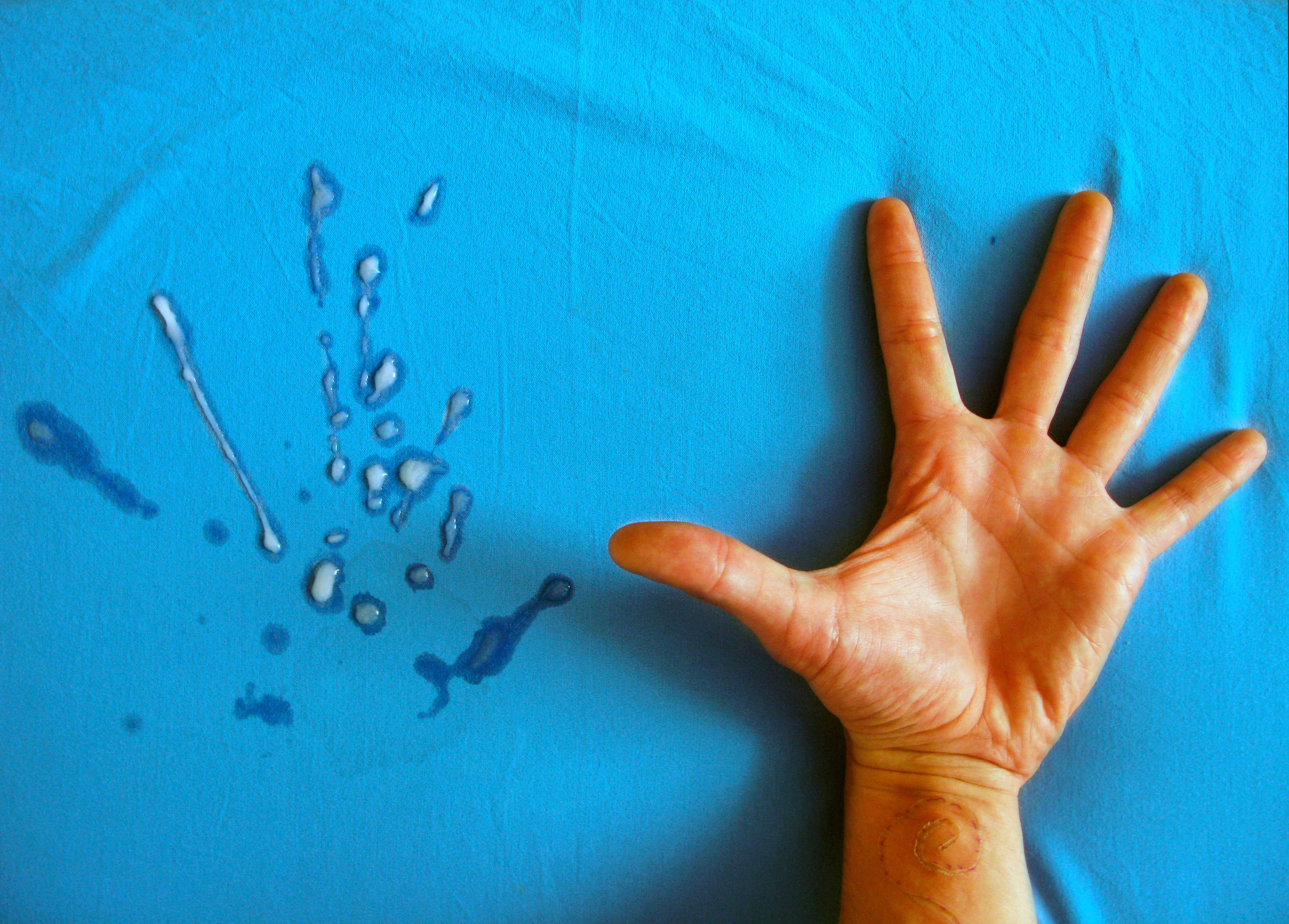
Anwesenheit. Dasein.Ichten.
What imprint does an Author leave behind? And which is the stronger—the genome or the script? Which more accurate? More reliable? The trace of his hand as a gnostic pen, or the seed of his praxic gut? In which current does it make sense to invest the power of one’s writing, the force of one’s semia, the voltage of one’s possibility and one’s genius? In the power of seed, or of semiosis? In Zoe—the bare, pulsing fact of life—or in Bios—the narrated, the formed, the political? In the children-praxis, in those almost-living essences that quicken within the alembic of gnosis?
For if everything is a Text—il n’est pas de texte que d’intertexte—then everything is not yet only a Text. The creation of something new, of a work-of-art, of a work-of-life, is always the fabrication of what is not from what is, if we permit ourselves the maximum algebraic abstraction. It is an astonishing process: conception and analysis, intuition and calculation, preparation and heuristics, precession and honed skill and the naivety of revelation, chance and will, intuition and intension. It is a simultaneous moment of writing and of reading, of acceptance and of donation—a complex, non-metaphorical, non-metaphysical interweaving, topological and energetic, of the present past and the future, understood not as concepts or metrics of time but as concepts and metrics of space, non-linearity, energy, poesis and autopoesis.
Unravelling, guessing and wondering.....
Petals of language.
.....................The constellation of a sign, the stalks of meaning, the ensembles of cells of being.
guessing
unravelling.
Divination, on signs from the self as on stars of being. Near one’s time
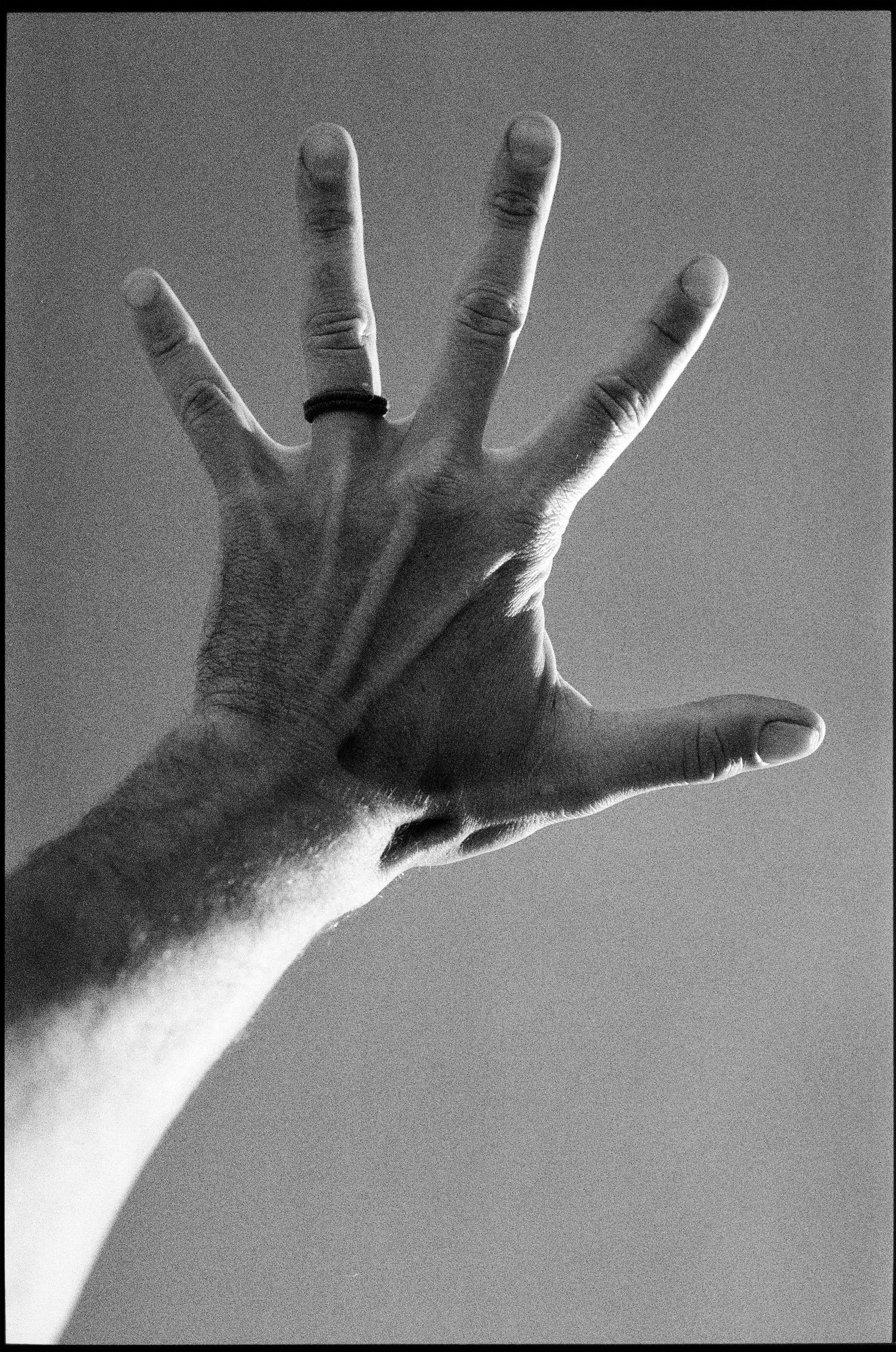
What, then, is the author’s hand as a sign? It is the only sign that consistently includes the entirety—the metaphorical, the biological, the anthropological, the phylogenetic and ontogenetic—functioning in the mode of universal communicability, of allgemeinen Mitteilbarkeit: everything with everything, total literalness and total abstractness, systemic closedness and openness. Calculated mastery and all possible unique and dissipative heuristics. Total intimacy and closure, total interiority of the psychic and cognitive sign—the sign of the author, of conception and creating—and yet, simultaneously, total expositionality and openness to the world, to the other, to reading, to invasion: total exteriority of the semiotic, expressive, creative sign—the sign of the work, of creation.
This sign is the most resistant. It is inert rather than aggressively defensive; it is totally autonomous from any ideological or semiotic indoctrination, from any finite and predictable disciplinary programming of meanings and expressions, from any theory that would seize and delimit it, abstract it, conceptualize it in one reductive fashion or another, appropriate and re-appropriate it. As ur-mythology, it is astonishingly plastic and universal. Moreover, it does not hybridize in Latour’s sense; it slips through dichotomies and oppositions. It is neither the body of nature nor the body of anthroposemiosis—it is the body of myth.
And all the more so because this semiotic system, this mythology, is founded not upon the word, but upon something far older: upon the body, upon the proto-causality of all that follows. The hand and its creation. The hand and its complex creator. The hand that, in the long and bloody journey of extended evolutionary synthesis, partly made man out of ape. The hand is always the imprint of Homo; it is always the imprint of the Hero, the Author, the Master, the Poet, the Winner or the Loser. It is always a slightly condescending theodicy, if we speak of the imaginative and mystical, the doxal and religious aspects of signification. It is a connection with the “fine-turning creator"—but a connection with action rather than with the analysis of creation. And the connection is primary, primordial, analogical: a connection built on known and implicit similarity, on weak or strong identity. It stands opposed to the superficial connection of interpretation, manipulation, discourse—the connection through logos, through the word, which is so treacherously unstable, so evasive, so young among the artificial semiotics.
The hand does not interpret. The hand inscribes. And in that inscription, it does not ask for reading—it asks for recognition: the recognition of a presence that predates language, that outlasts theory, and that returns, in every gesture of making, to the same aboriginal question: not what does this mean?, but whose hand was here?
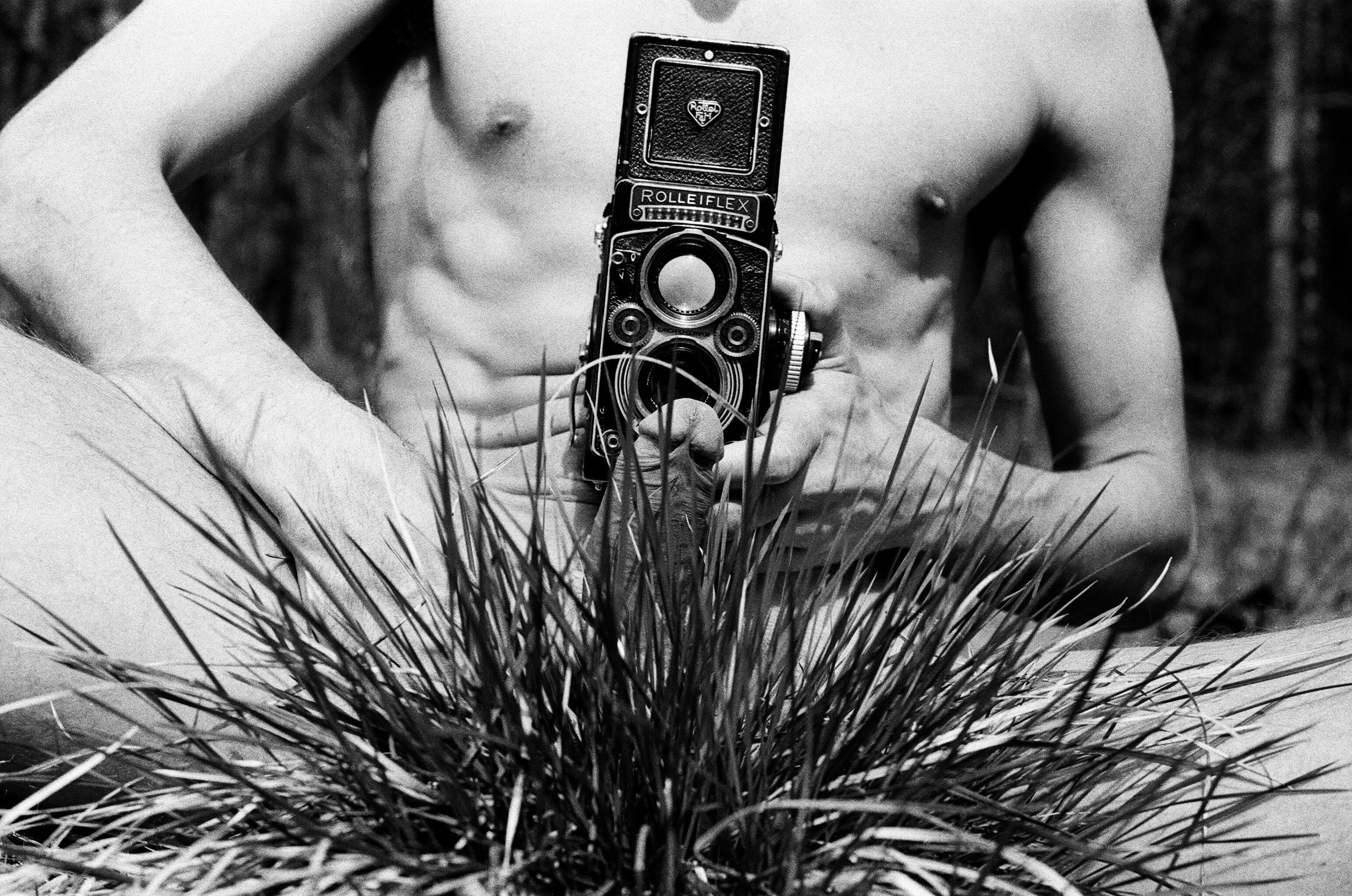
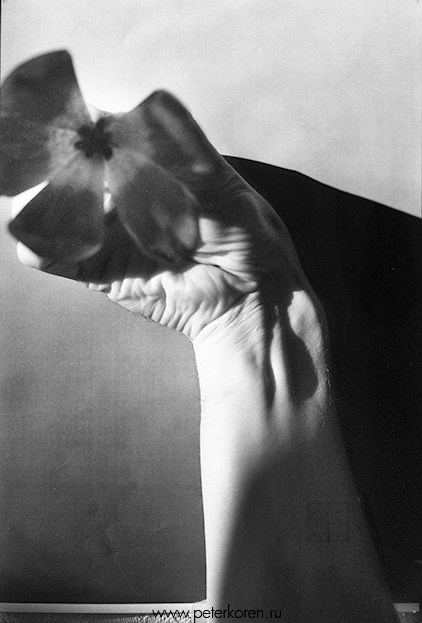
On Photography. Semiogenesis
