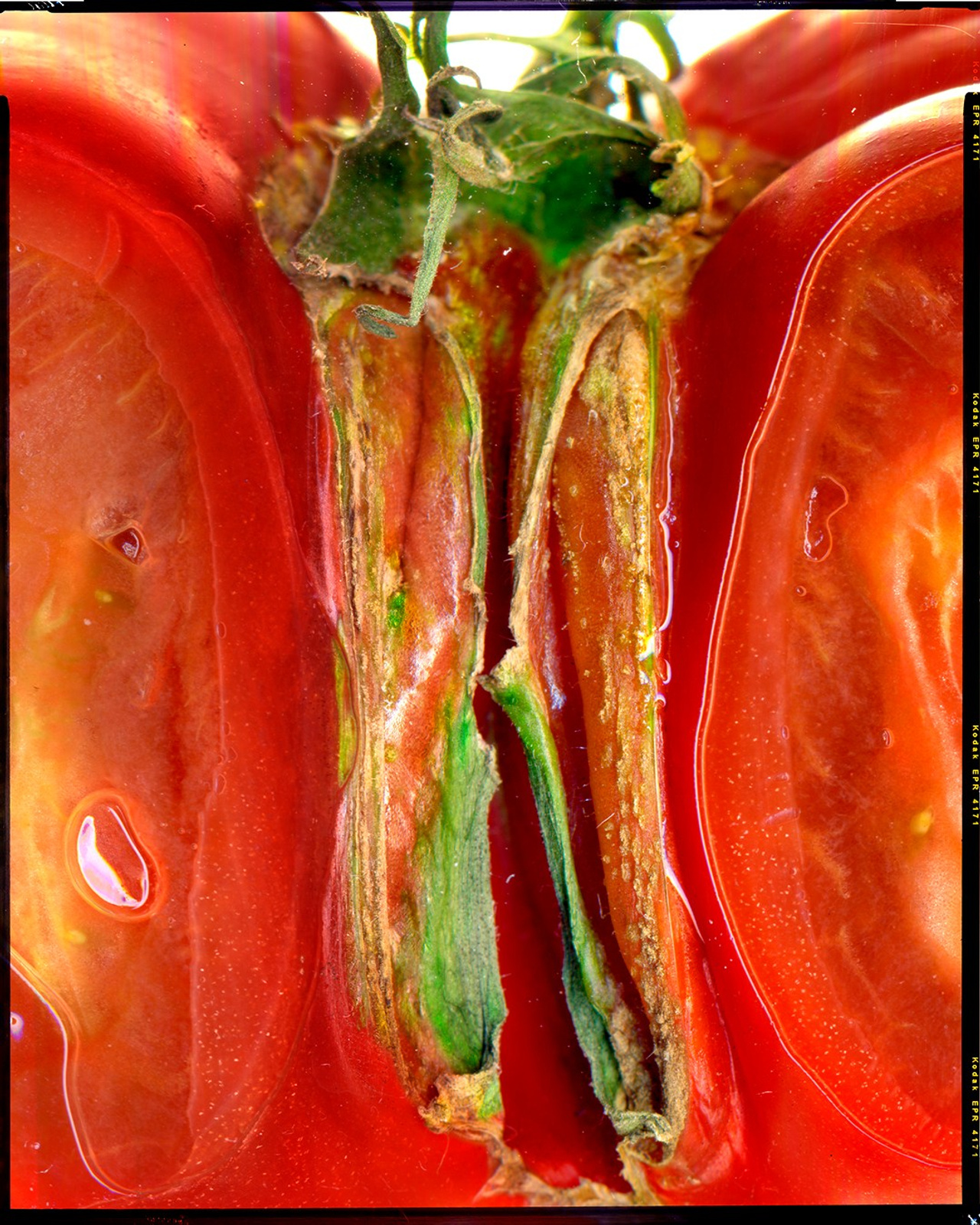
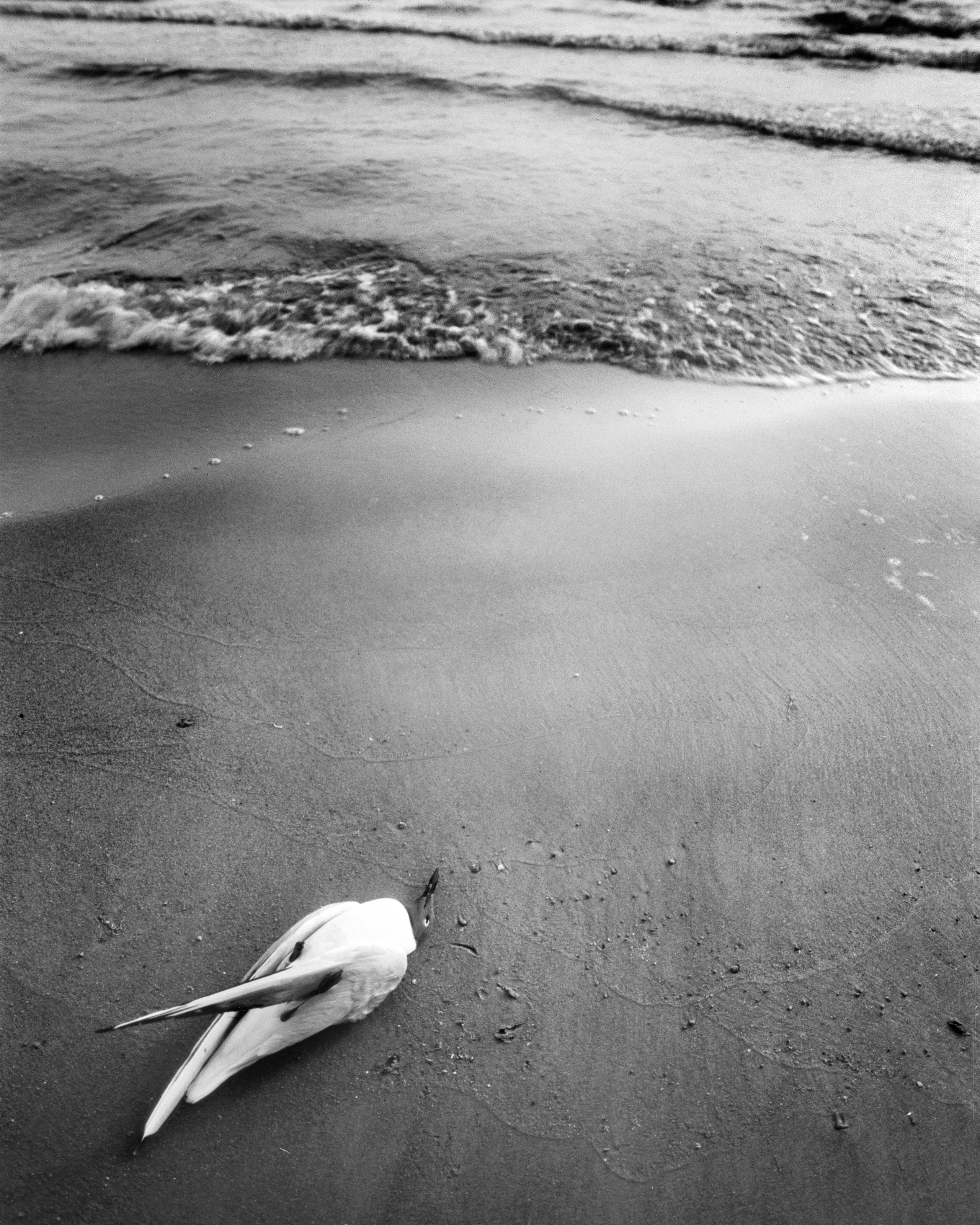
Questions and ideas to bear in mind regarding each photograph—only a handful of them, which happened to spring to mind—as mediated through the body’s all-encompassing, quivering vision:
What does it mean to be naked? What does it mean to be naked—clothed yet naked, naked and not naked, generative and dead? What does every fragment of the body you see signify for your vision—every fragment, part, area of your body and of the body of another, the real body and the symbolic, illusory, phantasmal body—for your desire, for your memory, for your biochemistry? What does it mean, and what does everything you have seen (both what is visible and invisible to the eye, and what is visible and invisible to the imagination), persistently perceived, apperceived, corporeally appropriated, translated from all languages of code and meaning external to the body into an internal stream—not comprehended, but merely sensed, and sensed only by you—of intertwined streams of qualia-afferent (afferent synthesis[1]) and teleodynamic sub-streams, signs and sensations? Why is this so? Why should the artist not be comprehensible? Why should a work of art be accessible? And what does it mean to be alive—to generate desire and discovery, meaning and confusion? This is the principal question that haunts me, and every photograph is a murmuring attempt at a direct, enchanted, Trojan response—slowed to infinity or fleeting, a response that slips by or shimmers. What are rhythm, montage, connection, pictoriality and expressiveness? What is love as a phenomenon disembodied across all organisms, belonging in equal measure to an expanded evolutionary synthesis—not to you, but to life itself—and at the same time to you and specifically to you, in your infinitely complex bio-semiotic individuality? (But I continue to ask:) is an image not a gesture of that which is depicted, and is it a gesture and an instance of that which is not there, of that which is not depicted, of that which is hidden, of that which whispers, addressing your desire directly, bypassing us, bypassing you—bypassing and setting aside the obvious, the visible, the tedious—speaking in the language of shadows, dreams, arousal and discovery, flashes of insight and erections? Is it the image (the work as a subject) or the depicted (the author) that provokes? I do not know. What is said is not the same as what is heard; what you film is not the same as what has been filmed; the substance being depicted is not the same as the depicted substance; what remains unsaid is infinitely different in every specific instance of reception; every reading is unique. . . The author couldn’t care less about 'what' or 'how' for the viewer; the author communicates only with another author, couldn’t care less about the viewer at all. This is a weak (author-viewer or recipient), linear form of communication that does not give rise to the next work (questioning, searching, creation)—no true work is created for the viewer: …‘Taking the “recipient” into account never contributes to an understanding of a work or an art form. It is a mistake to take a specific audience or its representatives into account; moreover, even the concept of an ‘ideal’ recipient is detrimental to any theoretical inquiry into art, since such inquiry is ultimately based on the postulate of the existence and essence of the human being as such. Art itself also presupposes the physical and spiritual existence of the human being; yet in none of its works does it proceed from the human capacity for perception. No poem is intended for the reader, no painting for the viewer, no symphony for the listener’… (W. Benjamin. ‘Die Aufgabe des Übersetzers’. © Suhrkamp, 1974–89.)
[1] V.G.Red’ko, D.V.Prokhorov, M.B.Burtsev, Theory of Functional Systems, Adaptive Critics and Neural Networks, in Proceedings of International Joint Conference on Neural Networks, Budapest, 2004, pp.1787-1792